Campaign Launched to Get More Women into Science: The Challenges Matilde Gaete Has Faced in Her Quest to Become the First Chilean Woman in Space
With the message “Don’t let a ‘no’ stop you,” the Foundation is launching a campaign that highlights the gender gap in STEM—where women account for only one in five students enrolled—through the story of Matilde Gaete, who is determined to reach space.
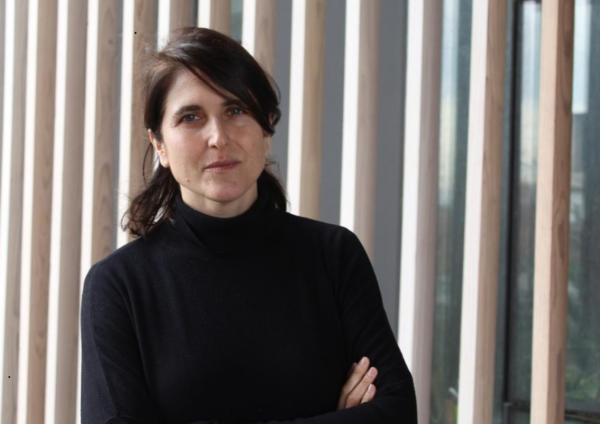
Matilde Gaete (21), a senior studying physics engineering at the Catholic University who has undergone astronaut training, is the face of the Luksic Foundation’s new “Women Who Can Do Anything” campaign, which aims to promote women’s participation in STEM—fields related to science, technology, engineering, and mathematics.
Matilde’s interest in science began at an early age; when she was 12, she told her mother she was going to be an astronaut when she grew up, and at 18, she participated in a NASA space camp. In 2024, she became the first civilian to undergo military astronaut training with the Chilean Air Force (FACH).
The road hasn’t been easy. She wasn’t selected the first time she applied for the NASA camp. And she explains how, far from giving up on the idea, she tried again the following year. She adds that the lack of Chilean female astronauts to look up to made her dream seem much more distant: “At various times, I was close to setting the idea aside and thinking about something ‘more realistic,’ like working in a space-related field.”
Drawing on its history and with the message “Don’t let a ‘no’ slow you down,” the Luksic Foundation seeks to promote greater female participation in STEM fields. Although women are less likely to drop out during their first year of higher education, graduate at a higher rate than men, and take less time to complete their studies, only one in five enrollments in STEM programs were by women in 2026 and, among those engaged in research in the country, only one in three is a woman.
“We believe that one of the things that defines us in Chile is our determination to succeed, often by overcoming obstacles and setbacks. Talent is everywhere, but it hasn’t always had the same opportunities to flourish. That’s why it’s essential today to focus on STEM fields. We need more women in laboratories, technology, research, and industry, because incorporating their perspectives not only expands their opportunities but also enables us to create solutions with a broader impact for the country,” explains Fernanda Orellana, Training Manager at the Luksic Foundation.
The Importance of Female Role Models
Matilde Gaete says that her dream of becoming an astronaut stemmed not only from her fascination with space, but also from a clear purpose: to contribute to her country through research, development, and innovation.
Throughout that process, the fact that others believed she could achieve whatever she set her mind to was crucial. Matilde credits her mother and her teachers, who fostered her interest in science from an early age. She recalls that when she told her mom she wanted to go to space (at age 12), her mom’s initial reaction was one of concern about the risks of that career path, but not of doubt. She also remembers how a teacher gave her her first robotics kit and introduced her to female role models in the field, broadening her horizons from a young age.
One of the goals of the Luksic Foundation’s campaign is to raise the profile of women working in STEM fields. Evidence shows that role models are key to encouraging more girls and young women to venture into these fields and also to helping those already in them stay the course, especially in traditionally male-dominated environments.
That is why, through its website, Mujeres que Todo lo Pueden seeks to highlight testimonials and build a community.
Concrete Support: “More Women in STEM” Scholarships
In addition to the “Women Who Can Do Anything” campaign, the Luksic Foundation awards the “More Women in STEM” Scholarships, which support students in technical and vocational education with a monthly stipend that they can use as they see fit for the duration of their studies.
To date, more than 300 women have benefited from the program. In 2026 alone, the scholarship recipients range in age from 18 to 59; 53% work while studying, and 30% are mothers, reflecting the daily efforts of thousands of women striving to get ahead.