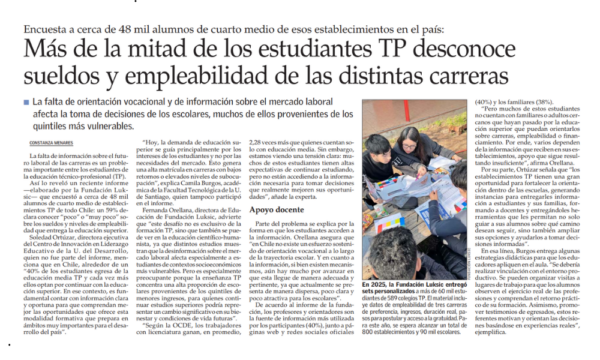
Aspirations for the Future 2025: more than 63 thousand students received information on access to higher education
- For the fifth consecutive year, the Luksic Foundation, through the Aspirations About the Future (ASF) program, surveyed high school students to learn about their interests and barriers to continuing their studies.
With the participation of 63,612 young people from 589 professional technical schools in all regions of the country, ASF seeks to learn about the motivations, expectations and challenges faced by high school students, while providing them with clear and useful tools to make informed decisions about their academic future.
Each student received a set of personalized resources that includes information on the importance of accessing higher education, with data on employability and income, financing opportunities and their requirements, guidance on higher education institutions and the duration of their careers, as well as a calendar with the most relevant milestones of the admissions process.
In addition, the 589 participating high schools received a physical and digital report with the main results of the survey applied to their students, as well as general recommendations to accompany them at the end of their schooling. These tools allow management and teaching teams to make evidence-based decisions and strengthen the educational trajectories of their communities.
Fernanda Orellana, Director of the Education area of the Luksic Foundation, said: “We have seen a growing interest among teaching teams in promoting the career paths of students in secondary vocational-technical education. We believe that the information provided by Aspiraciones Sobre el Futuro not only helps students to make informed decisions, but also helps schools to support and guide them in this process”.
ASF in figures
The results of the survey applied by the program reflect the information challenges faced by students when projecting their academic future. Six out of ten young people reported having little or very little knowledge about the financing alternatives available, while only 4% stated that they were aware of the requirements for accessing Gratuidad. In this scenario, the majority recognized their professors as their main source of information on higher education.
These findings reinforce the importance of the program in providing students with clear and accessible information that supports young people and their educational communities at a key decision point.