More than half of vocational training students are unaware of the salaries and job prospects for different degree programs
According to a study by the Luksic Foundation, the lack of career guidance and information about the labor market affects the decision-making of schoolchildren, many of whom come from the most vulnerable income quintiles, El Mercurio reported.
The lack of information about career prospects is a major problem among students in technical-vocational (TV) education. This was revealed in a recent report we prepared at the Luksic Foundation, which presented the results of a series of surveys of nearly 48,000 12th-grade students at TP schools throughout Chile: 59% reported knowing “little” or “very little” about the salaries and employability rates associated with higher education.
Soledad Ortúzar, executive director of the Center for Innovation in Educational Leadership at the University of Development—who was not involved in the report—notes that in Chile, approximately “40% of students graduate from technical-vocational high school and an increasing number are choosing to pursue higher education. In this context, it is essential to have clear and timely information so that students can better understand the opportunities offered by this educational pathway, which prepares them in areas that are crucial to the country’s development.”
“Today, the demand for higher education is driven primarily by students’ interests rather than by market needs. This leads to high enrollment in degree programs with low returns or high levels of underemployment,” explains Camila Burgos, a professor at the School of Technology at the University of Santiago, who also did not participate in the report.
Fernanda Orellana, Director of Education at the Luksic Foundation, notes that “this challenge is not unique to vocational education; it can also be seen in science and humanities education, as various studies show that misinformation about the labor market particularly affects students from more vulnerable socioeconomic backgrounds. But it is particularly concerning because vocational education attracts a high proportion of students from the lowest-income quintiles, for whom continuing on to higher education could represent a significant improvement in their well-being and future living conditions.”
“According to the OECD, workers with a bachelor’s degree earn, on average, 2.28 times more than those with only a high school education. However, we’re seeing a clear tension: many of these students have high expectations of continuing their education, but they aren’t accessing the information they need to make decisions that will truly improve their opportunities,” adds the expert.
Teaching Support
Part of the problem stems from the way students access information. Orellana states that “in Chile, there is no sustained effort at career guidance throughout students’ school years. And as for information, while mechanisms do exist, there is still much progress to be made in ensuring that it is delivered in an appropriate and relevant manner, since it is currently presented in a scattered, unclear, and unappealing way to students.”
According to the foundation’s report, teachers and guidance counselors are the most frequently used source of information among participants (40%), along with official websites and social media (40%) and family members (38%).
“But many of these students do not have family members or close adults who have gone through higher education and can guide them on career choices, employability, or financing. As a result, many rely on the information they receive at their schools—support that continues to be insufficient,” says Orellana.
For his part, Ortúzar points out that “TP institutions have a great opportunity to strengthen career guidance in schools by creating opportunities to provide information to students and their families, training teachers, and giving them tools that allow them not only to guide their students on the path they wish to follow, but also to broaden their options and help them make informed decisions.”
Along these lines, Burgos offers some teaching strategies for educators to apply in the classroom. “There should be a connection to the professional world. Workplace visits can be organized so that students can observe these professions in action and understand the practical benefits of their education. Likewise, sharing testimonials from graduates is important; these role models motivate students and help guide their decisions based on real-life experiences,” he explains.
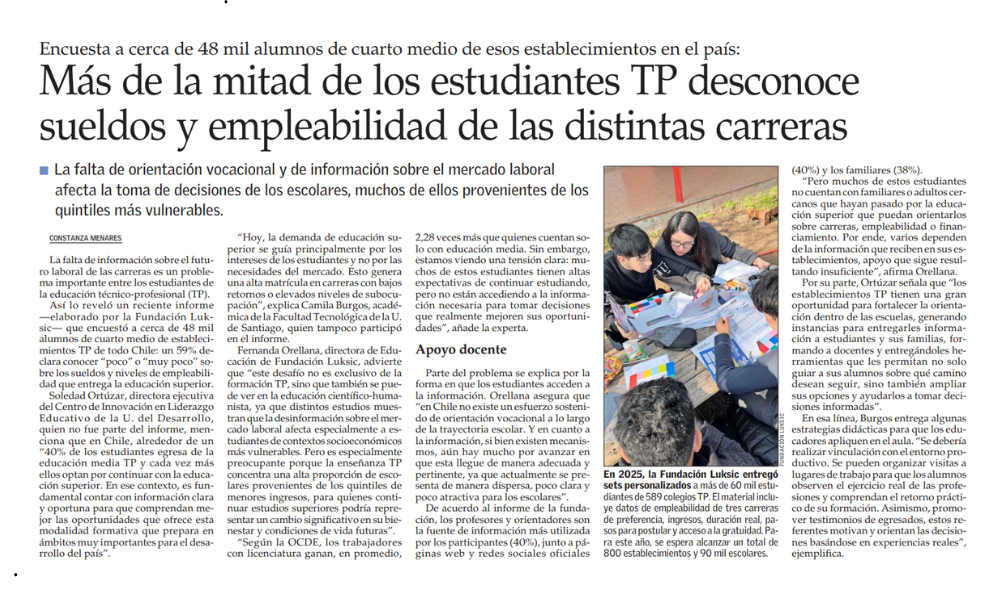
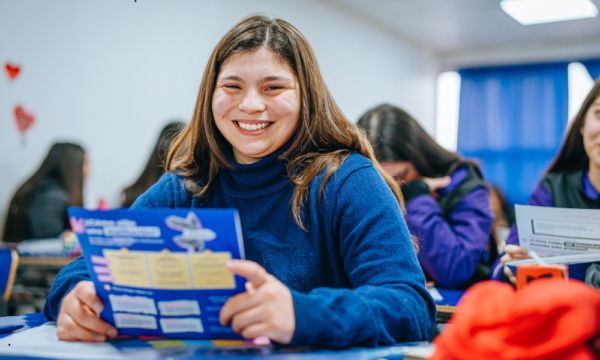
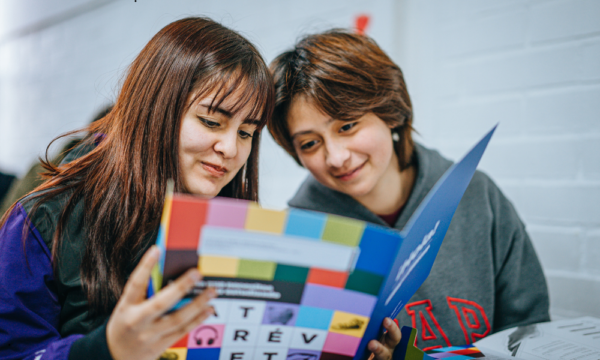
In 2025, through our Aspiraciones program, personalized kits were distributed to more than 60,000 students at 589 TP schools. The materials include information on employability for three preferred degree programs, tuition costs, actual program duration, application steps, and eligibility for tuition waivers. This year, we expect to reach a total of 800 schools and 90,000 students.
Register your school in the Luksic Foundation’s Aspiraciones program here.