Global Pathways brings together organizations to deepen service design in social programs
The Luksic Foundation held the third breakfast of the cycle, where it presented its new Policy Brief “Service Design in Social Programs” and developed a practical activity with civil society organizations and academia to strengthen the incorporation of a people-centered approach.
The Luksic Foundation held a new session of Global Pathways, this time focused on the design of services in social programs, a methodology that allows a deep understanding of people’s needs and improves the effectiveness of interventions. The event brought together nearly 20 representatives of civil society organizations, academia and other relevant actors.
In this context, the new Policy Brief was presented, which brings together the fundamentals of this approach, its main tools and the experience of the Luksic Foundation in its application. During the presentation, key concepts, applied methodologies and lessons learned from research and cases developed by the Foundation were discussed in depth. Among them, the study on female participation in sports, where the design of services allowed to identify barriers, build user profiles and propose evidence-based solutions.
“With Global Pathways we want to drive conversations that help improve the way we design and implement social programs in Chile. Service design means thinking about people when delivering or producing a social service. Collaboration between civil society, academia and the public sector allows us to move towards more humane solutions with real impact,” said Macarena Cea, General Manager of the Luksic Foundation.
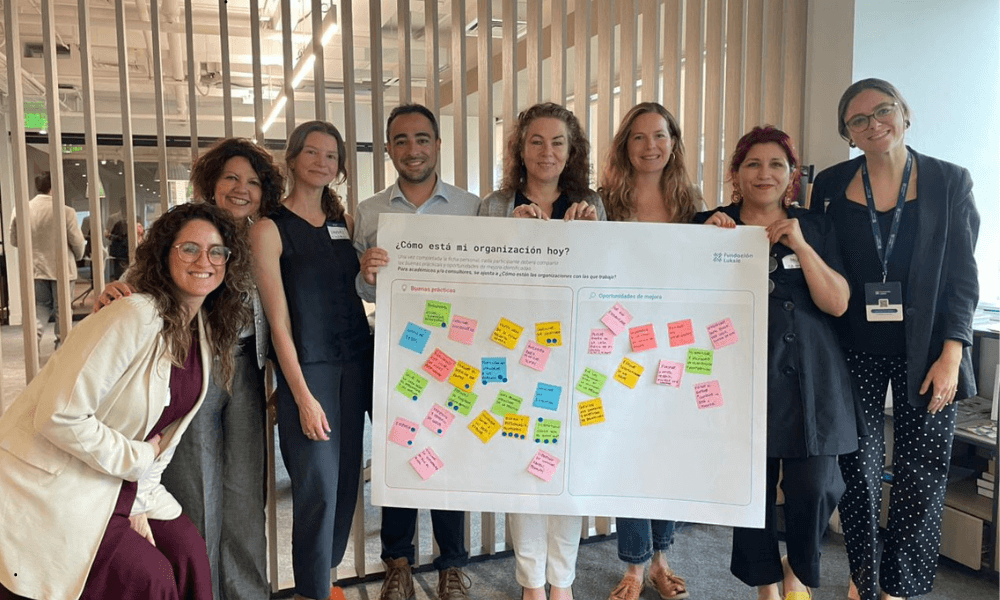
The workshop also included a practical activity in which the organizations present carried out a self-assessment of their level of incorporation of the service design approach, which allowed them to identify good practices, gaps and opportunities for improvement in their programs.
“These types of conversations organized by Fundación Luksic raise the standard of the ecosystem, creating a culture in relation to program design, in relation to how we focus on people and consider them in that design,” said Florencia Alamos, Fundación Kiri.