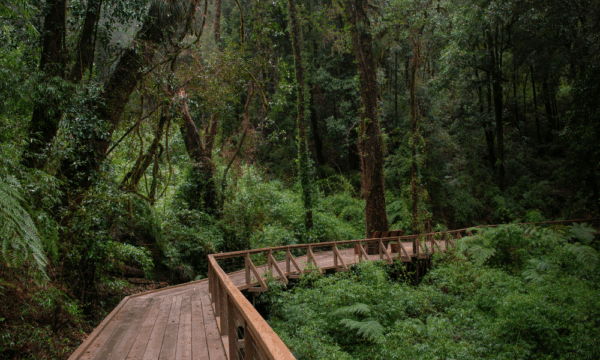
Pirinel Park Opens Its Doors to the Public
On Saturday, February 14, Pirinel Park—an initiative of the Luksic Foundation’s Conservation Division—began operating on a trial basis; Outlife will be responsible for its management.
Located in the municipalities of Panguipulli and Los Lagos, it is named after the Pirinel estuary, a waterway that originates at the volcano and flows into the Enco River.
The park is open Tuesday through Sunday. S Admission is by ticket, which can be purchased on the Outlife website. There will be 120 spots available each day, and the cost will be 2,000 pesos for youth ages 13 to 17, 4,000 pesos for adults ages 18 to 59, and free for people with disabilities, children 12 and under, and adults over 60.
In turn, residents of Choshuenco, Punahue, and Paillahuante will have free access.
There is still no date set for its official opening.
Features
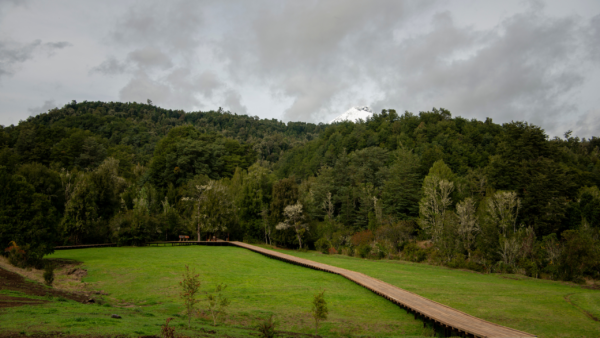
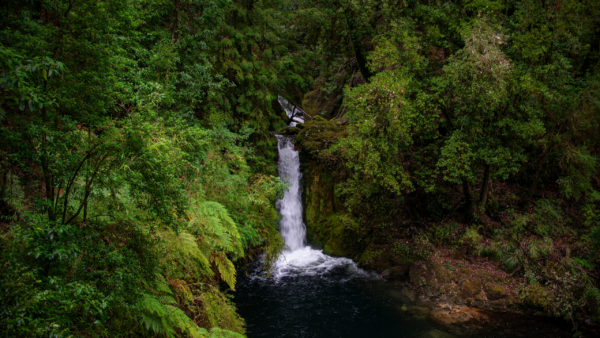
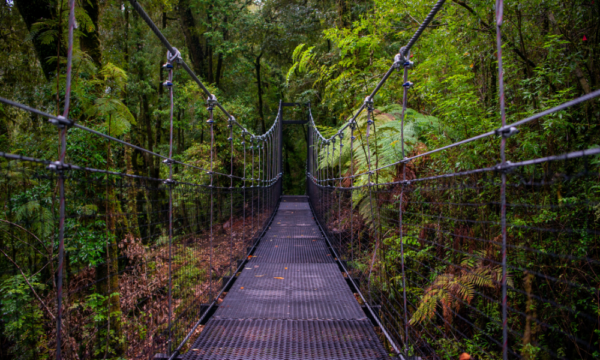
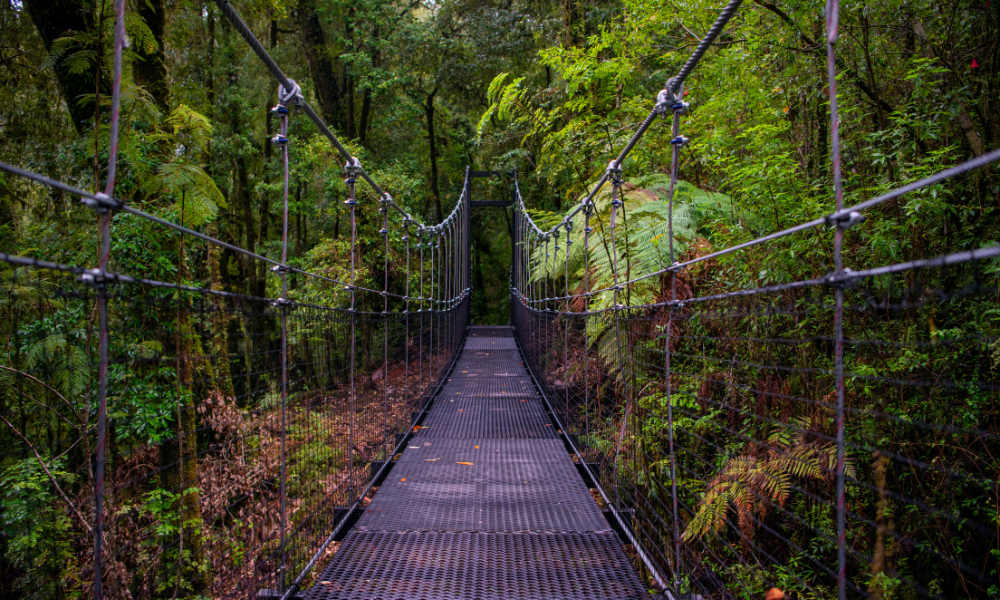
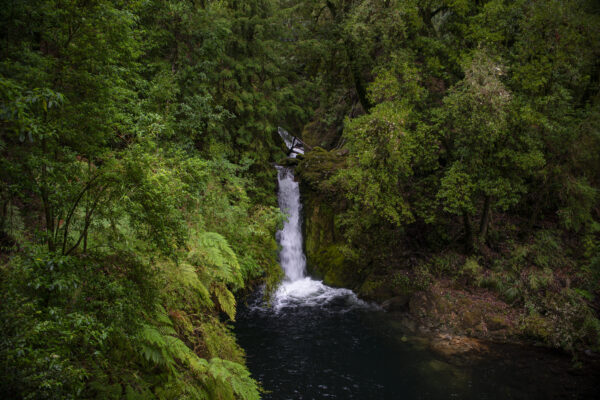
The park covers an area of 12,000 hectares, with more than 10 kilometers of trails and four overlooks, designed for different levels of experience. The Cascada del Pirinel Trail is an inclusive, low-difficulty route. It’s an ideal option for families with children, people short on time, or those looking for a less physically demanding experience.
Three moderate-difficulty trails branch off from the Cascada area: Las Vertientes, Del Silencio, and Bosque Antiguo.
These trails are interconnected, allowing hikers to plan routes based on the time and energy they have available. One of the highlights is the Coihue Centenario trail, which connects Las Vertientes with Bosque Antiguo.
All the trails end at a common point called La Raulicera, a natural amphitheater overlooking the Mocho-Choshuenco Volcanic Complex.
Nicolás Mora, director of conservation at the Luksic Foundation, said, “We are very excited about this project. We have been working for more than three years with experts and nearby communities to create a park dedicated to conservation and science that will help protect biodiversity in Chile.”
Along the same lines, he emphasized that “seeing it open to the public today is a big step toward that dream; we are very happy with the reception it has received. We hope that those who visit will be able to experience the wonderful natural beauty of this place and, through that experience, be inspired to take care of it as well.”
Meanwhile, according to a report published by Outlife on its website, the park has been equipped with infrastructure designed to support conservation and provide a safe and enriching visitor experience.
They explain that this includes designated hiking trails, strategically located rest areas, observation points for viewing flora and fauna, and interpretive and directional signage that guides and educates visitors about the natural environment and best practices for enjoying the outdoors.
In addition, they report that the design and installation plan for these elements was the result of a multidisciplinary effort carried out in collaboration with the Luksic Foundation and all parties involved in the project.
Conservation
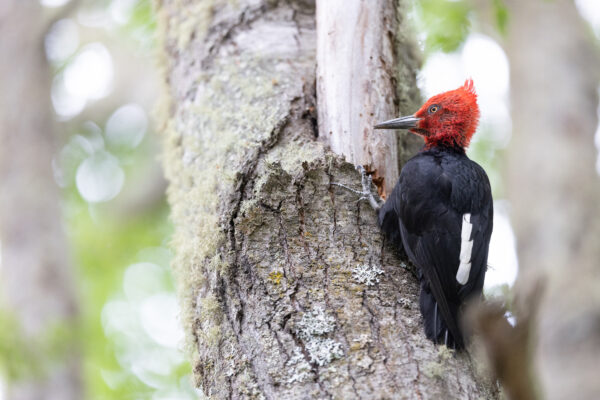
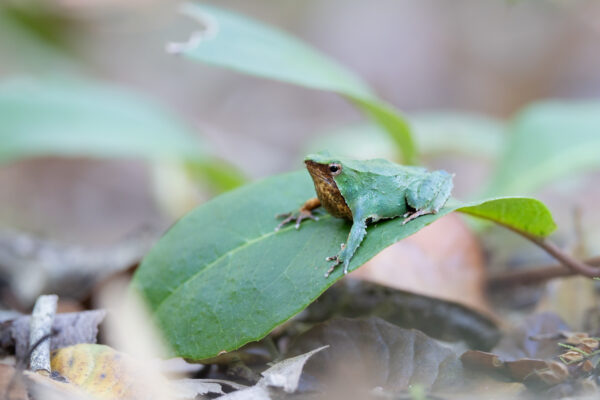
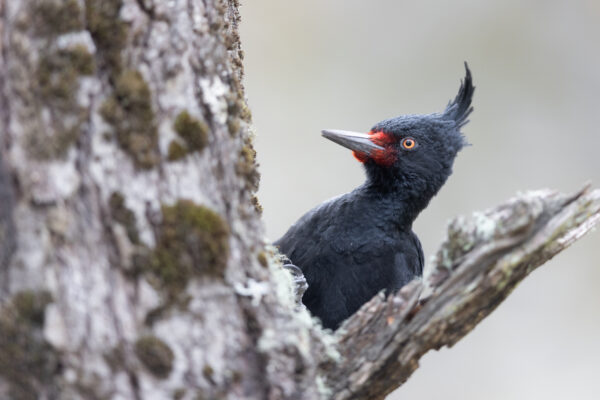
The Foundation explained that the area chosen for the park is of great ecological importance due to its biodiversity and because it is home to a vast array of unique species and ecosystems. Among the main conservation targets, they noted, are the pudú, Darwin’s frog, the temperate rainforest, and the mountain peaks that provide vital water to the region.
Furthermore, this environment is home to endangered species such as the huillín, the carmelita, the peladilla, and Darwin’s frog. All of them are part of Chile’s natural heritage, and their protection—they emphasized—is a priority.
In addition, there are ten species in the area classified as vulnerable, and their preservation requires ongoing, dedicated efforts to ensure their survival.
In this context, the park’s goal is to dedicate this land to science and conservation. Thus, they seek to establish a space that not only protects biodiversity but also promotes knowledge and research as the foundation for Chile’s more sustainable development.
The Luksic Foundation seeks to open this area to the community to promote respectful interaction with nature, environmental education, and sports. In line with this, and based on the belief that people take better care of what they know, the park is designed as a protected area open to the public for educational purposes, with a focus on raising awareness of local biodiversity and ecosystems.
Pets, smoking, and drones are not allowed in the park.
They value space
This private conservation initiative was praised by Alberto Tacón, regional director of the Biodiversity and Protected Areas Service, who noted that “it is located within a biosphere reserve, contributing significantly to the conservation of our country’s biodiversity.” In this context, he said that “it could be incorporated into the National System of Protected Areas as a privately managed protected area, should its owners request it, or it could be subject to one of the other biodiversity conservation measures established by Law 21,600 in the future.”
In turn, Juan Pablo Leiva, the regional director of the National Tourism Service (Sernatur), noted that the development of new facilities, equipment, and attractions “is a necessity for any growing destination.”
“This,” he said, “allows us to diversify our offerings, relieve congestion at other points of interest, makes us more competitive, and provides new reasons for visitors to come.”
Along the same lines, he stressed that private investment is essential in this regard, “and just as the number of permits for tourist attractions is growing, we hope that the availability of lodging and other services that help us attract visitors year-round will continue to grow,” the official emphasized.