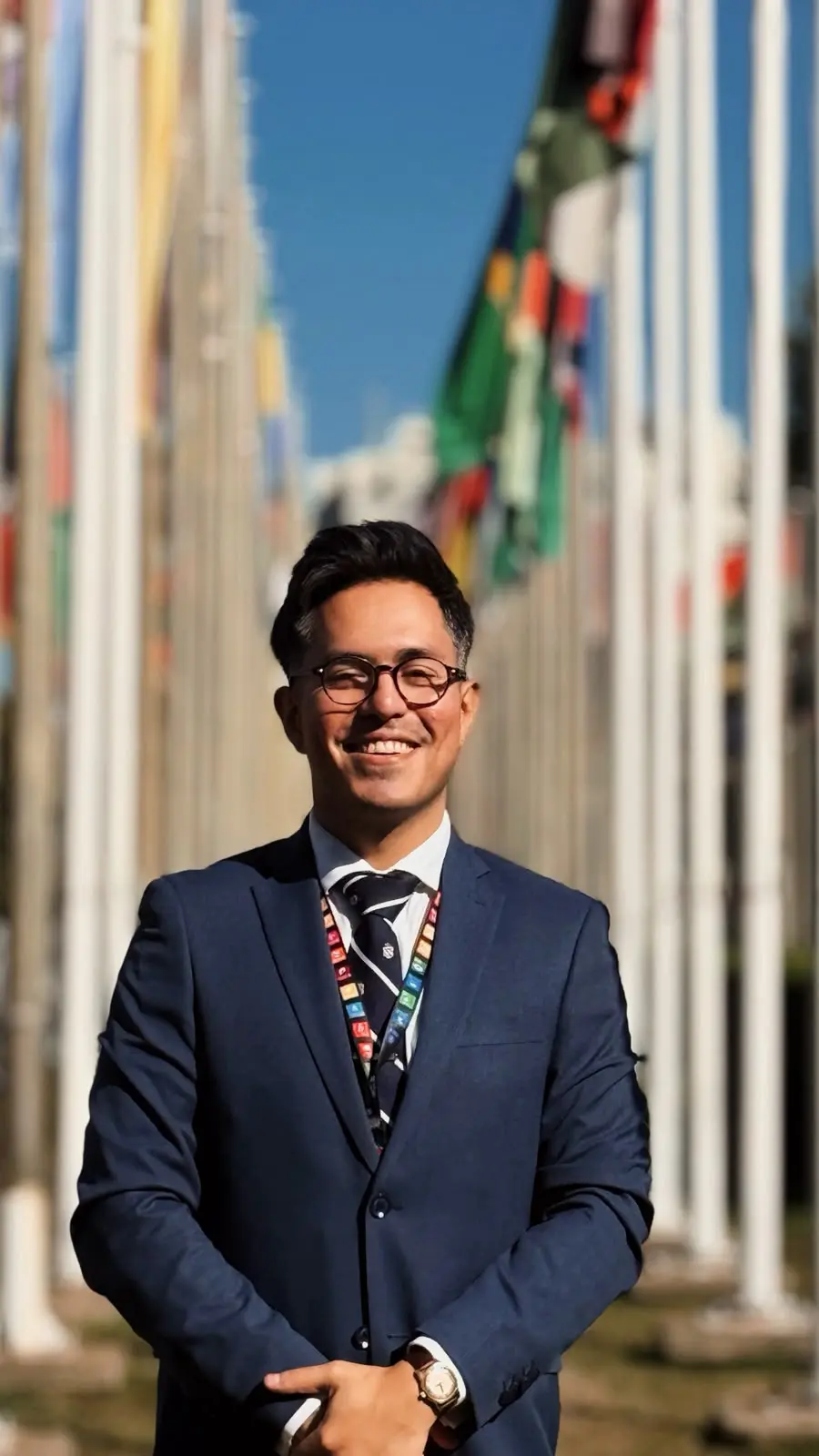
An experience that broadened his horizons: Nicolás Isamit and his time at Sciences Po
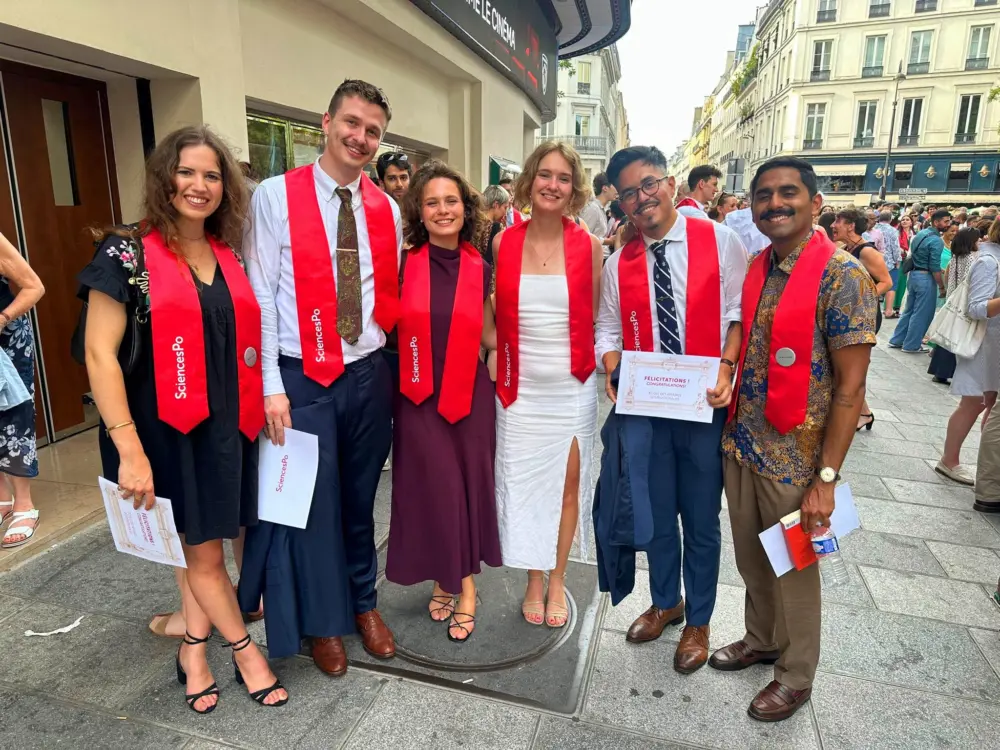
After studying Political Science, completing his internship, and working as a political advisor at the Ministry of Foreign Affairs, Nicolás decided to take a step he had dreamed of for years: specializing in international security at Sciences Po in France. Thanks to the Luksic Scholarship, he began a master’s degree that not only broadened his academic and professional opportunities, but also transformed the way he sees the world. Today, he shares the lessons he learned from this experience and offers advice to those who dream of studying abroad.
“If you’re the smartest person in the room, then you’re in the wrong room.” For Nicolás Isamit, this phrase took on special meaning when he arrived in Paris to pursue a master’s degree at Sciences Po. After an outstanding academic career in Chile, where he was the top student in his political science class, he found himself for the first time in an environment where every classmate had a different perspective to contribute and much to teach him.
But his path to France wasn’t a straight one. He first studied film, motivated by his interest in photography, but after two years he felt he needed a degree that would allow him to develop other skills and interests.
He had always been drawn to history, strategy, and analysis, so in 2019 he decided to start his academic journey again, this time studying Political Science. After graduating in 2023, completing his professional internship, and subsequently working as a political advisor at the Ministry of Foreign Affairs, he began turning a long-held dream into reality: studying abroad.
He chose Sciences Po, one of Europe’s most renowned universities. He wanted to specialize in international security, intelligence, and defense—fields that aligned with his professional interests and his aspiration to one day work at Interpol. After being accepted in 2023, he applied for the Luksic Scholarship, which enabled him to take the plunge and begin his master’s program in September 2024.
“I was very happy, eager to finally achieve a dream I’d been pursuing for years. But I was also nervous about everything that leaving entailed: being far from my family and friends, and starting from scratch in a place where I didn’t know anyone,” he recalls.
The two-year program covers subjects such as intelligence studies, cybersecurity, foreign policy, European affairs, and geopolitical analysis. It was a demanding program that also required adapting to a different academic environment.
Isamit explains that critical thinking is encouraged in Chile, but at Sciences Po, it was put into practice on a daily basis. “In every presentation, we had to include critiques of the author or theory we were studying, regardless of whether this was part of the grading criteria,” Nicolás recalls.
But it was precisely that diversity of perspectives that most shaped his experience. “In Paris, I was never in the wrong room. All my classmates had an interesting point of view on something. Nothing is as simple as it seems. Most of what I learned came from other students,” he explains.
Nicolás also started a new life. He currently works in international logistics at a logistics company located on the outskirts of Paris. His workday begins early, and much of his job involves coordinating operations and resolving unforeseen issues in supply chains that connect different countries. Added to this was the challenge of living far from his family and friends, learning to get by in another language, and building a support network from scratch.
Although he acknowledges that it isn’t always easy, he says that leaving Chile allowed her to get to know herself in a different way and broaden her horizons, both personally and professionally. During this time, he also had the opportunity to work at the Chilean Delegation to UNESCO, travel, and meet people from different cultures and backgrounds.
“I used to have a view of the world that I felt was pretty accurate. Today, I’m much more open-minded and aware of what’s going on around me and how much other people can teach me. Meeting someone from Lebanon, hearing about their experiences, and understanding their story is invaluable. These are lessons you don’t find in the news,” he explains.
Looking back, Nicolás notes that the support from the Luksic Foundation was key to bringing to fruition a project he had been preparing for years. “I wish there were many more opportunities like this one. I don’t think there’s any support quite like the Luksic Scholarship: it’s a beacon for people like us who dream of studying at renowned universities. What the Foundation does is incredibly valuable because it changes your life,” he says.
For those who are thinking about applying today, her advice is to take the plunge, do your research ahead of time, and come with a willingness to learn: “It won’t be easy, and it won’t be all sunshine and roses, but it will change your life—for the better. You’ll be afraid to make the decision, to go through the paperwork, and to learn to live on your own. But that’s exactly the moment when you have to take the leap and make your dreams come true. If you don’t take the leap, you’ll be left with regrets. Problems get worked out along the way. It’s a journey of learning.”